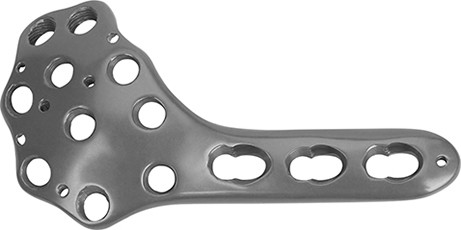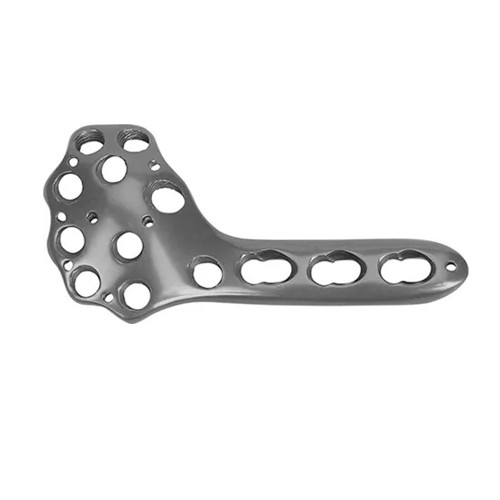
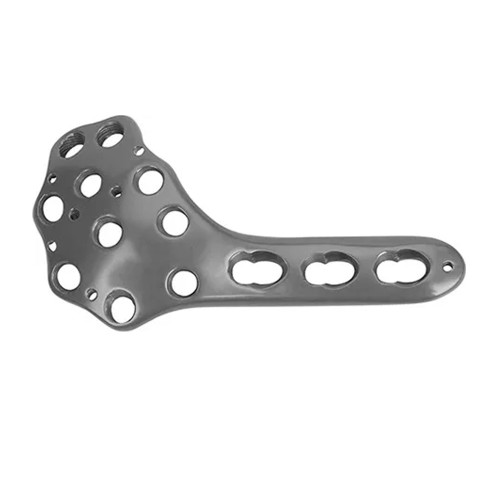
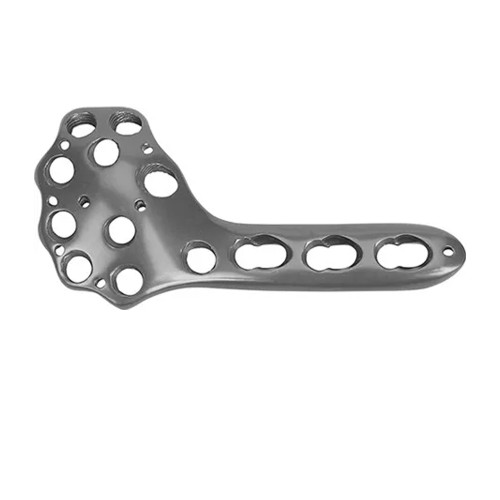
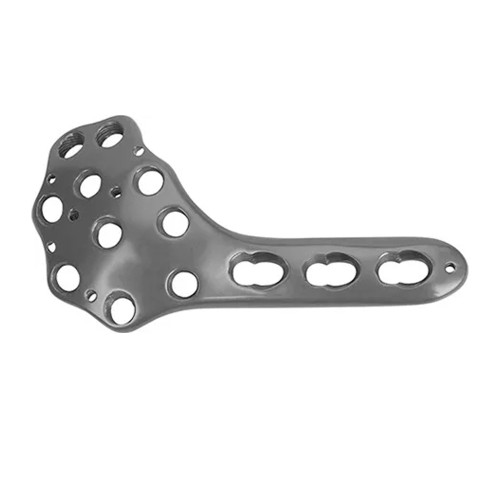
Fractures of the distal femur are severe injuries that present many clinical challenges to the orthopedic surgeon. These fractures are often unstable and comminuted and tend to occur in elderly or multiply injured patients. For long, gold standard treatment modality for fixation of the distal femur fractures was angle blade plate, compression screw, and side plate devices such as dynamic condylar screw. Insertion of blade plates is technically demanding Nowadays, anatomically contoured locking plates and locking screws are being used more commonly for surgical fixation during distal femur fractures.
Distal femur locking plate is still the way forward for treating distal femur fractures. Positive results have been published by researchers with implants such as distal femur nail, dynamic condylar screw, and even addition of a medial plate to a distal femur locking plate for treating distal femur fractures.
At present, the surgical treatment of distal femoral fractures is mainly through the lateral approach and anterolateral approach.
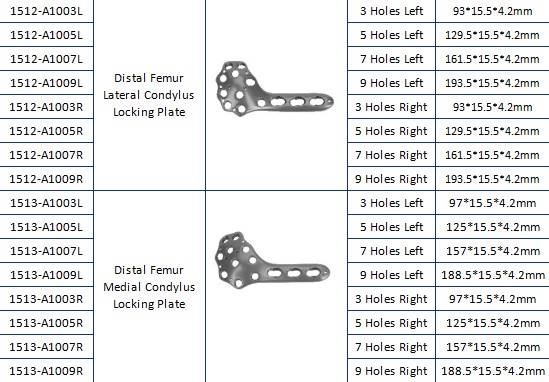
Quick Detail:
· Medical Class: Class III
· Model Number: 1512/1513
· Brand: Gather
· Spe:3-9 Holes
· Certificates: CE/ISO13485
· Material: Titanium
· MOQ:1 PC
· 3 Year Warranty
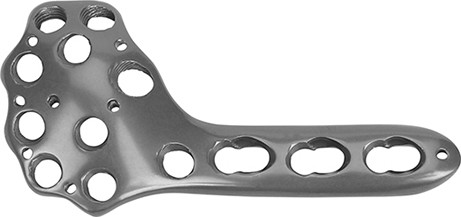
While intramedullary nails are well suited to fix extramedullary and simple articular fractures (C1), plates can also be used to treat complex articular fractures. Nevertheless, any displaced articular fracture component must still be anatomically reduced by an open approach and fixed with absolute stability. Fracture fixation was predominantly with anatomical periarticular locking plates, and a smaller number of retrograde intramedullary nails. Whilst this reflects the current literature, with the role of locking plates expanding as the technology evolves, studies supporting both methods of fixation have been published.